
French Guiana is the only French territory in South America, with two land borders: Brazil to the east, and Suriname to the west. For businesses in Cayenne, Kourou or Saint-Laurent-du-Maroni, working with neighbouring suppliers is natural, but paying in reals or Surinamese dollars is much less so. Between conversions, bank fees and compliance requirements, this guide details how to pay your foreign suppliers from French Guiana, under the same conditions as in mainland France.
An economy geared towards mainland France… and its neighbours
According to the IEDOM annual report, mainland France accounted for around 55% of French Guiana's imports in 2020. The French Antilles are another major source, particularly for petroleum products refined in Martinique. Outside French territories, Brazil and Suriname are among the regional suppliers, although still for modest amounts: regional trade remains a potential source of growth.
In addition, there are sectors specific to the territory, such as the space industry in Kourou, which rely on international suppliers paid in dollars. The most common currencies are therefore the US dollar (USD), the Brazilian real (BRL), the Surinamese dollar (SRD) and the Trinidad and Tobago dollar (TTD).
The same rules as in mainland France
French Guiana is an outermost region of the European Union: euro, SEPA area, FR IBAN, same compliance requirements and same licensed payment service providers as in mainland France. A transfer in euros to mainland France or the French Antilles is a SEPA transfer.
There is therefore no reason why a company in Cayenne should pay more than a company in Toulouse to pay a foreign supplier. For the full framework, see our guide to international payments in the Overseas Territories.
Guianese specificities
The Brazilian real: payments to Brazil may require additional information on the nature of the transaction on the beneficiary bank's side. An incomplete file can delay payment by several days.
The Surinamese dollar: it has experienced sharp fluctuations in recent years, and many Surinamese suppliers invoice in dollars or euros. Check the currency specified in the contract before paying.
The time difference: French Guiana is five hours behind Paris in summer, four in winter. Orders placed in the afternoon risk being sent the following day.
Compliance: informal cross-border trade exists, but companies must pay their suppliers through regulated channels, with invoices and supporting documents. Anti-money laundering obligations apply fully.
Worked example: a construction company
A construction company buys the equivalent of €150,000 worth of materials in Brazil every year. If it pays in euros and lets its supplier's bank perform the conversion, or if it goes through the dollar before arriving at the real, it incurs a double margin. An extra percentage point of margin represents €1,500 per year, to which must be added SWIFT fees and those of intermediary banks.
Best practices
Pay directly in reais when your Brazilian supplier invoices in BRL, to avoid double conversion.
Prepare the information requested by the beneficiary's bank before the first payment.
Compare the proposed rate to the interbank rate before each transaction.
Place orders in the morning, French Guiana time.
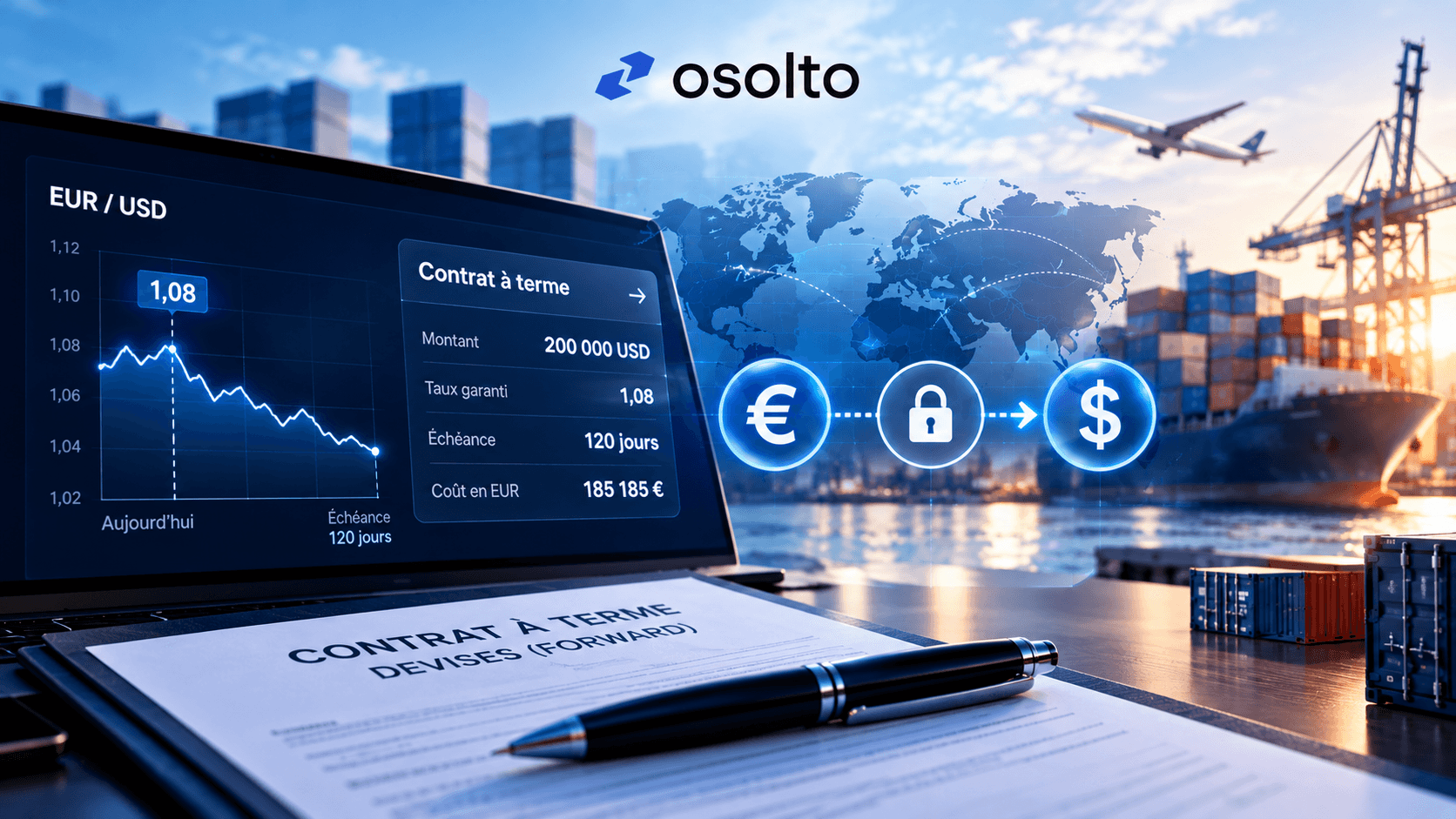
Secure large amounts with a forward contract.
OSolto, partner to French Guianese companies
OSolto is an independent payment services broker, registered with ORIAS. We compare solutions from licensed partners specialising in B2B foreign exchange to offer businesses in French Guiana the same conditions as in mainland France: rates negotiated and announced before each transaction, payments in many currencies depending on the partners, currency hedging and a single point of contact, within a compliant framework.
Do you also buy in the French Antilles? Consult our guide to international payments in Martinique.
Do you pay suppliers in Brazil, Suriname or the United States? Get a free analysis of your foreign exchange costs. → Book an appointment
FAQ
Is French Guiana part of the SEPA zone?
Yes. French Guiana is an outermost region of the European Union, integrated into the eurozone and the SEPA area.
Can you pay a Brazilian supplier in reais?
Yes, by international bank transfer. Paying in reais, when the supplier invoices in BRL, often avoids double conversion. Prepare the information on the nature of the payment that the beneficiary bank may request.
In which currency should you pay a supplier in Suriname?
The one specified in the contract. Many Surinamese suppliers invoice in US dollars or euros, due to the volatility of the Surinamese dollar.
Can you pay a supplier in cash across the border?
This is highly discouraged for a business: traceability and anti-money laundering rules apply, and any transport of cash of €10,000 or more entering or leaving the European Union must be declared to customs. A bank transfer remains the secure and justifiable solution.
Related Articles

Guides
9 Oct 2026
International payments in French Overseas Territories: the complete guide for businesses in the DOM-TOMs
Advice
8 Oct 2026
Currency forward contract: the complete guide to securing your SME payments
Advice
7 Oct 2026
Receiving a foreign currency payment on Revolut Business: how much does it really cost (and how to pay less)