
From Baie-Mahault to Pointe-à-Pitre, Guadeloupean businesses live to the rhythm of containers. A portion of their purchases comes from North America, Asia, or neighbouring islands, and is settled in dollars or regional currencies. Behind every invoice lies a conversion, bank fees, and sometimes weeks of exchange rate risk. This guide reviews the rules that apply in Guadeloupe and the ways to pay your foreign suppliers under the same conditions as in mainland France.
Guadeloupe's imports in figures
According to the IEDOM annual report, mainland France provided nearly two-thirds of Guadeloupe's imports in 2021, and other European Union countries accounted for 12.5%. Outside Europe, North America led with 13.2% of imports, ahead of Asia (5.6%). Trade with other Caribbean islands remained low, at around 1.3%.
Around a fifth of the archipelago's purchases therefore come from outside the European Union and are settled in foreign currencies, primary among which are the US dollar, followed by the Canadian dollar (CAD) and the yuan (CNY).
The same rules as in mainland France
Guadeloupe is an outermost region of the European Union: it uses the euro and belongs to the SEPA area. Accounts have an FR IBAN, transfers in euros to mainland France, Martinique or Europe are SEPA transfers, and the applicable regulations are those of any French business. Saint-Martin, for its French part, and Saint-Barthélemy, former municipalities of Guadeloupe, are also in the euro and in the SEPA area.
A business in Jarry therefore has access to the same international payment solutions as a business in Lyon. For the complete framework, consult our guide to international payments in overseas territories.
Points of vigilance
Exposure to the dollar: with more than one in ten purchases settled in North America, the euro-dollar exchange rate directly influences your cost prices.
The time difference: five hours behind Paris in winter, six in summer. Orders placed in the afternoon risk being sent the following day.
Payments to Asia: goods often arrive after transshipment and several weeks at sea, which extends the period of exposure to foreign exchange risk.
Caribbean currencies: East Caribbean dollar (XCD) for Dominica or Antigua, Dominican peso (DOP): these currencies are rarely offered on good terms.
Intermediary fees: a payment in dollars generally transits through a US correspondent bank, which charges its commission.
Worked example: a construction company
A construction company imports the equivalent of €400,000 worth of equipment every year from the United States and Canada. One percentage point too much on the exchange margin represents €4,000 per year. If part of the orders is paid three months after signing, a 5% increase in the dollar on a €100,000 balance adds another €5,000.
To break down these costs, read also how much an international bank transfer really costs.
Best practices
Ask for the rate before each payment and compare it with the interbank rate.
Pay in the invoicing currency (USD, CAD, CNY) so as not to let the supplier's bank convert on your behalf.
Group payments together to limit fixed fees.
Place orders in the morning, Guadeloupe time.
Hedge large orders with a currency hedge.
OSolto, partner to Guadeloupe businesses
OSolto is an independent payment services broker, registered with ORIAS. We compare the solutions of authorized partners specializing in B2B foreign exchange to offer businesses in Guadeloupe the same conditions as in mainland France: rates negotiated and announced before each transaction, multi-currency accounts, currency hedging and a single point of contact, without changing banks.
Do you also work with Martinique? Consult our guide to international payments in Martinique.
Do you import from North America or Asia? Have your exchange costs analyzed for free. → Book an appointment
FAQ
Is Guadeloupe part of the SEPA zone?
Yes. Guadeloupe is an outermost region of the European Union, integrated into the eurozone and the SEPA area.
Is a transfer to Saint-Martin international?
To the French part of Saint-Martin, no: it is a SEPA transfer in euros. To the Dutch part, Sint Maarten, which uses another currency, it is an international transfer.
How do I pay a supplier in China from Guadeloupe?
By SWIFT transfer, in yuans or dollars depending on the invoice. Paying in yuans when the supplier accepts it often avoids double conversion. Ask for the rate applied before executing the payment.
How do I avoid intermediary bank fees?
By choosing the OUR option, which puts all fees at your expense so that the supplier receives the exact amount, or by using a provider that pays the supplier via a local account in their currency.
Related Articles

Advice
9 Oct 2026
International payments in French Guiana: a practical guide for businesses

Guides
9 Oct 2026
International payments in French Overseas Territories: the complete guide for businesses in the DOM-TOMs
Advice
8 Oct 2026
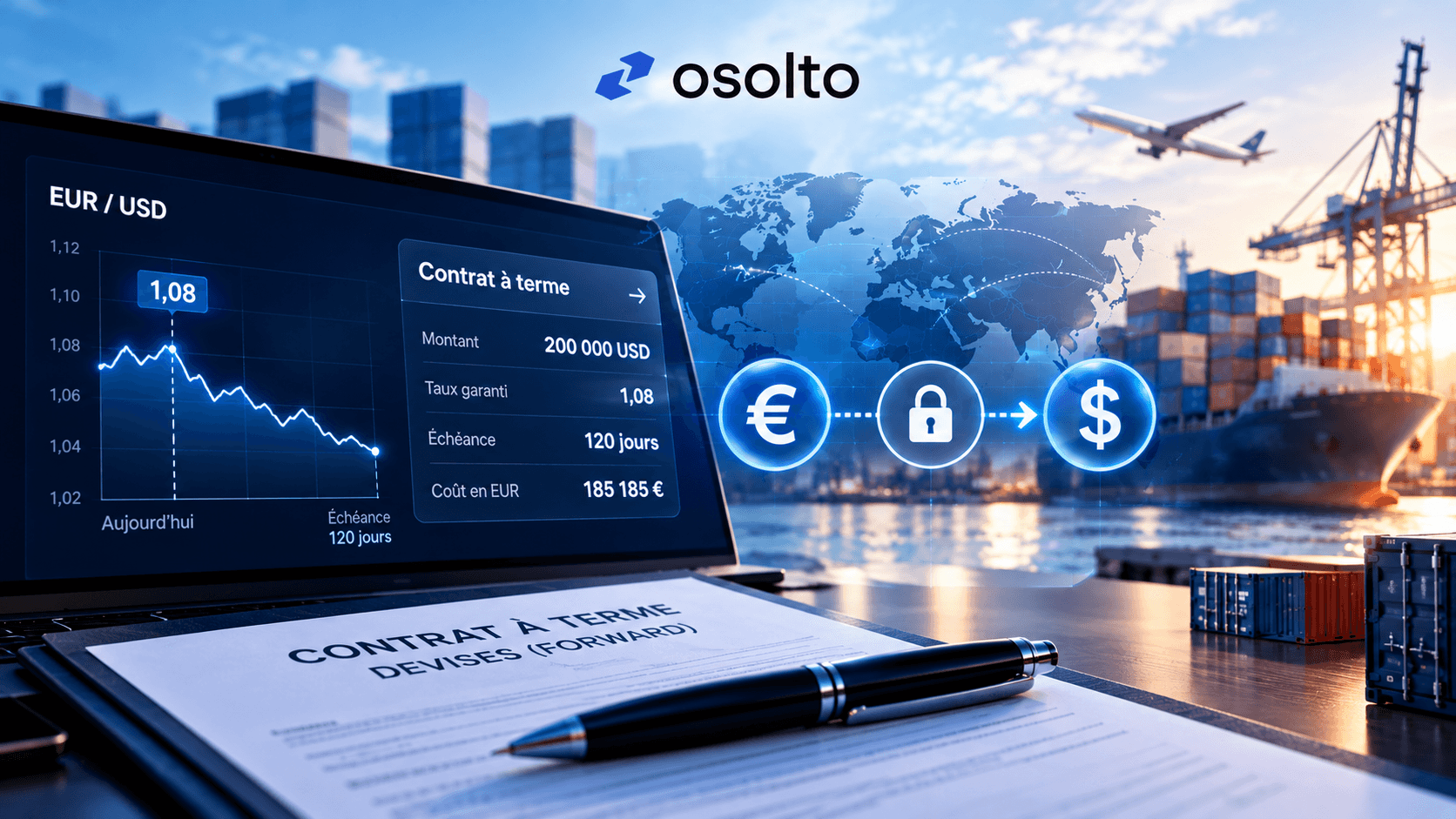
Currency forward contract: the complete guide to securing your SME payments