
Two of the world's most strategic maritime passages are currently disrupted simultaneously. The Strait of Hormuz, through which a major portion of the world's oil transits, has experienced significant restrictions since late February 2026. And on 12 September, Houthi forces completed their takeover of the Bab-el-Mandeb Strait, the gateway to the Red Sea, after seizing Perim Island, which marks its narrowest point.
For any business importing from Asia or the Middle East, this situation is not just a headline in the newspapers. It translates in concrete terms into longer delays, higher transport costs, and increased uncertainty for your supply schedules.
Two straits, one weakened supply chain
The Suez Canal, which before the crisis accounted for nearly 15% of global trade and 30% of global container traffic, saw its traffic drop to just over half its pre-crisis level during the January-August 2026 period, according to data from the IMF's PortWatch platform. Almost all major shipping companies (Maersk, CMA CGM, Hapag-Lloyd) have suspended their Red Sea crossings to avoid the area.
The Strait of Hormuz, for its part, remains subject to significant restrictions since the start of the conflict at the end of February, with oil traffic severely reduced on this route.
What this concretely changes for your imports
The most direct consequence is the almost systematic diversion of maritime routes around the Cape of Good Hope, at the southern tip of Africa, rather than through the Suez Canal. This detour represents:
An additional 10 to 15 days of transit on Asia-Europe routes
An estimated 30% increase in fuel consumption
Freight surcharges that can reach $2,000 to $4,000 per container depending on the shipping lines and the type of equipment
War risk insurance premiums increased by 100% to 200% for vessels sailing near high-risk zones
An alternative exists for flows towards the Gulf, with land transport via Turkey, Syria, and Jordan, taking about three weeks. However, this solution is not suitable for all types of goods or all volumes.
The indirect impact on your costs and currencies
These disruptions are not limited to freight. The price of oil has exceeded $100 a barrel, feeding inflation expectations that currently weigh on central bank decisions (see our articles on the recent decisions of the ECB and the Fed). This inflationary pressure directly impacts the volatility of the currencies in which you settle your suppliers and carriers.
Another often-underestimated point: freight invoices are frequently invoiced in dollars, which adds a foreign exchange exposure separate from that associated with paying for the goods themselves.
What this means for your payment management
For businesses that operate with split payments to their suppliers (such as 30% upon ordering, 70% upon arrival, see our dedicated guide), the longer transit times extend the period during which the balance remains exposed to currency fluctuations.
According to industry experts, the main risk is not so much a total and permanent closure of these shipping routes, but the persistent uncertainty surrounding them: no one can guarantee today how long the situation will last, or if it will worsen. It is this unpredictability that complicates planning the most, both logistically and financially.
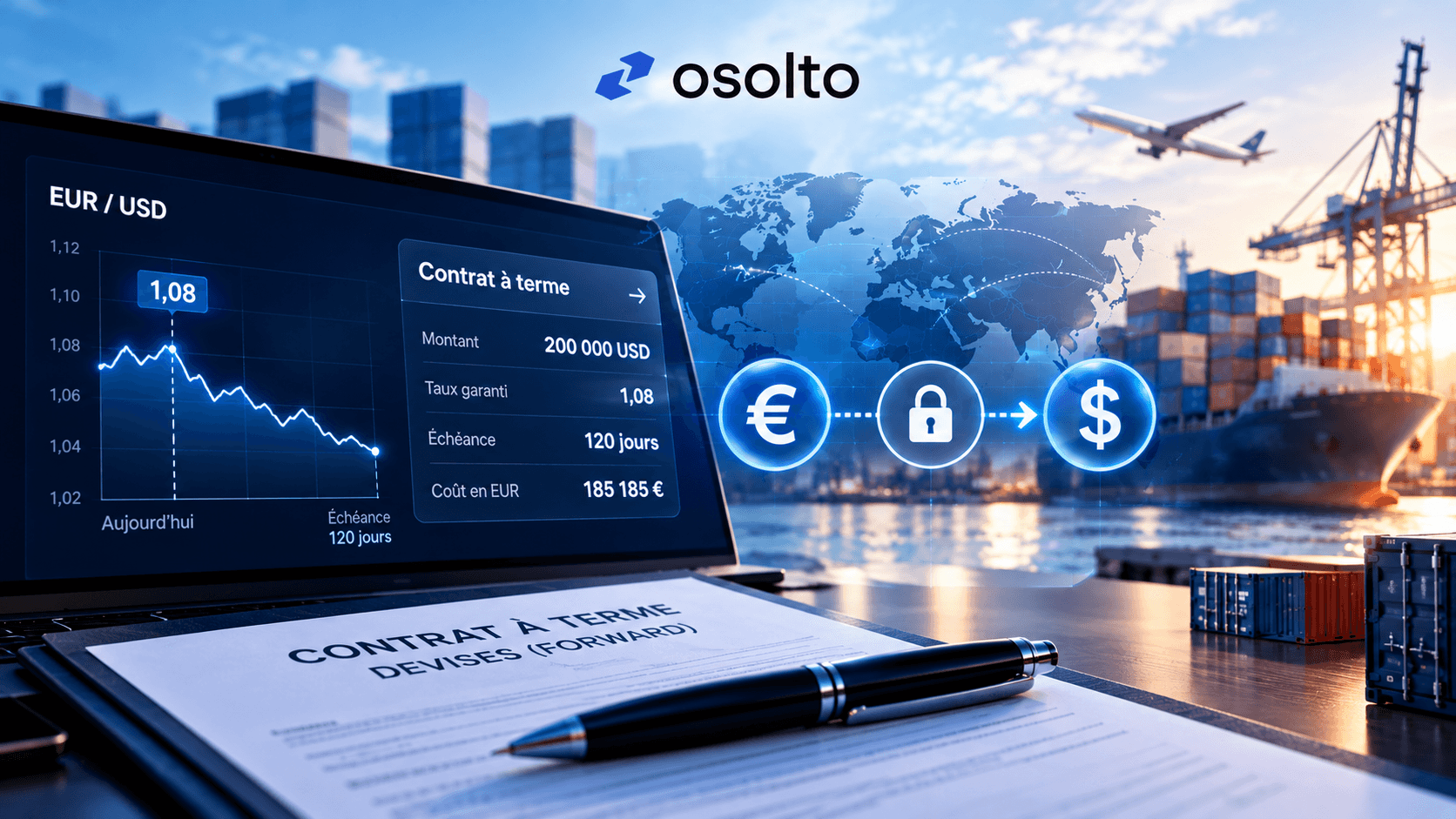
In this context, it becomes particularly useful to build a safety margin into the maturity of your currency hedging, rather than setting them to match exactly a delivery time that can change. Regulated payment intermediaries like OSolto, supervised by the ACPR and registered with ORIAS, assist SMEs in adjusting their currency hedging when supply times change along the way, with human support rather than standard automated management.
In summary
The combination of Hormuz and Bab-el-Mandeb creates an unprecedented situation for global freight: two strategic chokepoints disrupted simultaneously, almost systematically lengthened delays, and transport costs revised upwards. For businesses that import regularly, the challenge is no longer just to secure the price of the goods, but to integrate this logistical uncertainty into their currency payment management.
Would you like to review the exposure of your import flows in the current context? A free analysis can identify the relevant adjustments for your business.
FAQ
Is the Suez Canal completely closed today?
No, but its traffic remains highly reduced compared to its pre-crisis level, as the vast majority of shipping lines prefer to bypass the area as a precaution.
How much extra time should I plan for my imports from Asia?
On average, an extra 10 to 15 days of transit compared to a transit through Suez, to be adjusted based on your origin and destination ports.
Will the cost of freight continue to rise?
It directly depends on the evolution of the geopolitical situation, which is difficult to predict with certainty. The current surcharges reflect the forced detour and risk-related insurance premiums.
How can I adapt my currency hedging to uncertain delivery times?
By building a safety margin into the maturity of the hedge and remaining in contact with your advisor to adjust it if the delivery schedule changes.
Related Articles

Advice
9 Oct 2026
International payments in French Guiana: a practical guide for businesses

Guides
9 Oct 2026
International payments in French Overseas Territories: the complete guide for businesses in the DOM-TOMs
Advice
8 Oct 2026
Currency forward contract: the complete guide to securing your SME payments