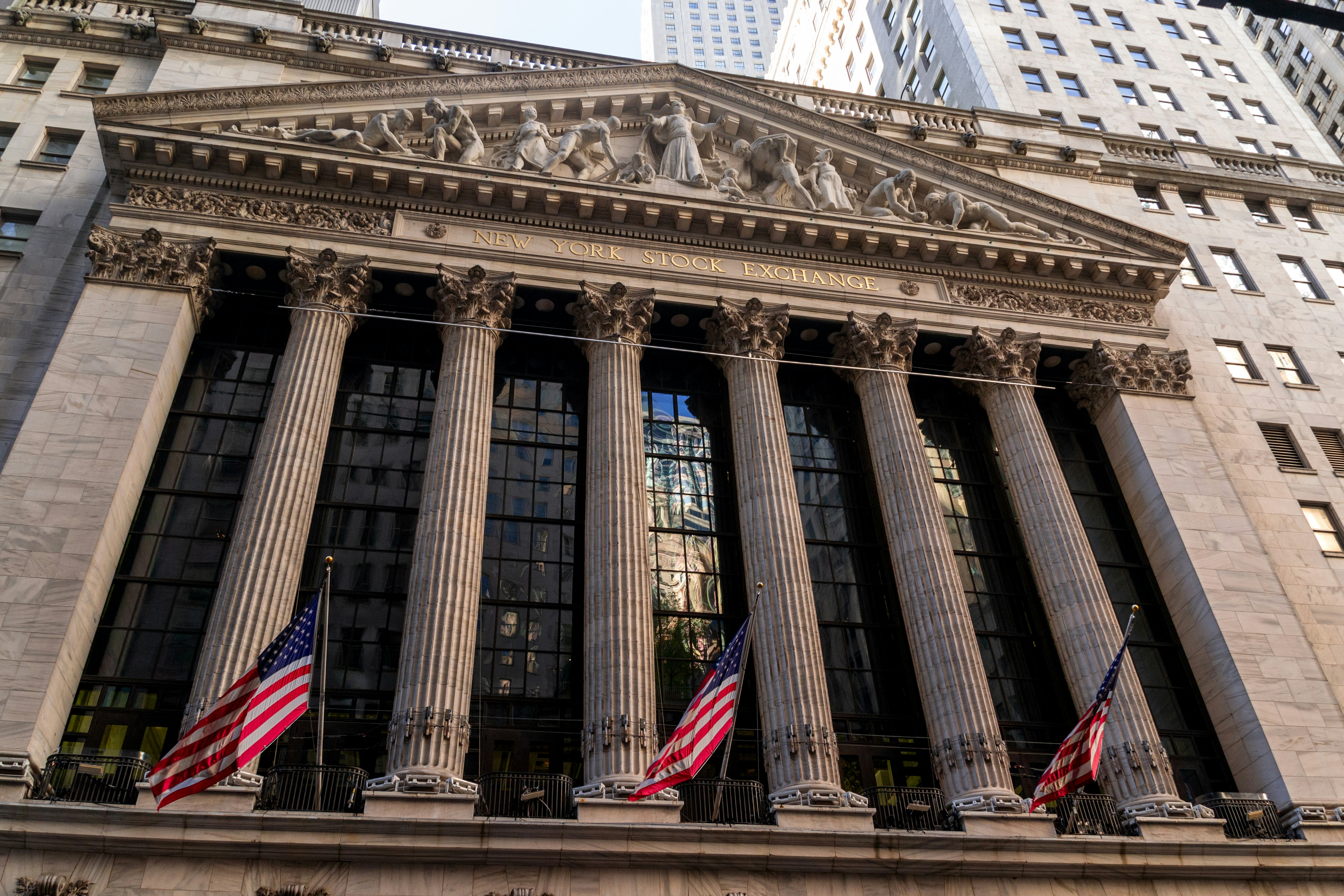
End of April 2026. The Fed has just kept its rates unchanged for the third consecutive meeting. The ECB and the Bank of Japan had done the same a few days earlier. In the financial media, this decision is presented as a sign of caution. For large institutions, that may be reassuring. For an SME that buys raw materials in Brazil, pays its suppliers in US dollars or pays Asian suppliers in yen — it’s a different story. Because the central banks’ "wait and see" approach does not mean stability. It means uncertainty. And uncertainty in the foreign exchange markets translates into one thing: volatility. This article explains what is really happening behind the scenes of global monetary policy right now, and above all, what that means in practical terms for managing your currency flows.
Powell shuts the door on rate cuts — and splits his own committee
On 29 April 2026, the Federal Reserve kept its policy rate range at 3.50–3.75% at what was probably the last meeting chaired by Jerome Powell, whose term ends on 15 May.
But the decision itself is not the real story. It’s what happened in the room.
For the first time since October 1992, four FOMC members voted against the main decision: one (Stephen Miran, appointed by Trump) for an immediate cut, and three others (Beth Hammack, Neel Kashkari, Lorie Logan) because they refused to let the statement hint at future cuts. They felt that with inflation at 3.3% and energy prices not yet having peaked, the bias should be restrictive — not accommodative.
This fractured vote says everything about the situation: the Fed does not know which direction to take. It is waiting to see whether energy prices will ease. It is waiting to see whether international trade tensions will subside. It is waiting. And meanwhile, its own designated successor — Kevin Warsh, approved shortly afterwards by the Senate Banking Committee — is arguing for cuts. The Fed could therefore change its chairmanship in the coming weeks, without anyone knowing exactly which way.
For foreign exchange markets, this institutional uncertainty is fuel for volatility.
Why are all central banks paralysed in 2026?
Beyond the Fed, the global backdrop is the same everywhere: the war in the Middle East has created a dilemma economists call stagflation.
On one hand, surging energy prices are pushing inflation higher. In the US, inflation has reached 3.3%, fuelled by oil prices and tariffs. The ECB now forecasts average inflation of 2.6% for the euro area in 2026, up from 1.9% at the start of the year.
On the other hand, that same energy shock is weighing on growth. A barrel staying above $100 for a prolonged period could halve euro-area growth, already expected to be a modest 1.2%. In the US, job creation has slowed sharply, even though unemployment remains relatively contained at 4.3%.
Faced with this dilemma — raising rates to rein in inflation or cutting them to support growth — central banks have chosen a third path: do nothing. And wait.
The Bank of Japan is holding at 0.75%, with an increasingly split internal vote (6 to 3) that points to a possible hike as soon as this summer. The ECB is keeping its deposit rate at 2.0%, without committing to any path. The Fed’s next meeting is scheduled for 17 June — under Warsh’s leadership if his full Senate confirmation comes through by then.
Status quo ≠ exchange-rate stability
This is the most common misunderstanding among SME leaders: believing that if central banks do not move, currencies do not either.
That’s false. In fact, often the opposite is true.
When markets do not know where policy rates are headed — or even who will be leading the Fed in three weeks — they react to every signal: a statement from Lagarde, a US inflation figure, a move in the Middle East, Trump putting pressure on the Fed. This constant sensitivity drives daily swings in EUR/USD, EUR/JPY and EUR/GBP pairs that few SMEs have the tools to anticipate.
Governor Christopher Waller said it clearly before the 29 April decision: if energy prices remain elevated and bottlenecks persist, inflation could become embedded across a wide range of goods and services, with second-round effects that are difficult to contain.
Bond markets have already drawn their conclusions: they are pricing in the US policy rate staying at its current level until at least mid-2027. No pivot. No cut. A long period of waiting — and volatility.
What is the real risk for your SME?
If your business makes purchases or sales in foreign currencies, you are mechanically exposed to exchange-rate risk. That risk exists even if you go through your traditional bank — it may not tell you so.
Here are the situations most exposed right now:
Importers invoiced in dollars (USD): the leadership transition at the Fed adds another layer of uncertainty to the greenback’s path. Warsh in favour of cuts vs. divided FOMC = foreseeable instability in EUR/USD in the coming weeks.
Companies with yen (JPY) flows: the Bank of Japan is on the verge of a turning point. A rate hike as early as this summer is possible — the yen is undervalued and could revalue quickly.
Any SME that pays suppliers in 30, 60 or 90 days: the rate you have in mind today is not the one you will pay at maturity. With a Fed that is institutionally divided and a successor whose monetary policy still has to be proven, the exchange rate in 60 days is particularly hard to predict.
What well-protected SMEs do in this environment
Companies that manage currency volatility calmly in periods of monetary uncertainty do not try to predict the markets. They hedge.
Concretely, that means:
Locking in an exchange rate in advance on future payments via forward contracts, in order to secure margins regardless of future Fed or ECB decisions.
Timing currency conversion well by regularly monitoring real-time rates.
Avoiding hidden fees from traditional banks which, on top of volatility, often take a 1 to 3% margin on every conversion without that figure appearing clearly on the statement.
This is not just for large companies. As soon as you exceed a few tens of thousands of euros in annual currency flows, putting a simple FX strategy in place becomes worthwhile.
How OSolto helps you get through this period
OSolto is an approved payment intermediary (registered with ORIAS, supervised by the ACPR and the Banque de France), specialising in B2B international payments for French SMEs.
Our positioning is simple: giving you access to the same FX hedging tools used by large companies, without having to change banks or transfer your funds to a third-party account. Your cash stays with you.
Concretely, we enable you to:
Compare, in real time the exchange rates offered by our partners (Ebury, CurrencyCloud) and your bank — and see the gap.
Put simple hedges in place tailored to your volume and payment schedule.
Reduce your FX costs by up to 50% compared with the fees charged by traditional banks, with fixed and transparent charges on each transaction.
Benefit from a dedicated human contact who knows your file — not a chatbot or a form.
Whether you are paying a supplier in dollars, pounds or dirhams, every transaction is handled within a regulated framework, with full traceability and AML/KYC compliance at every stage.
Conclusion
The Fed has just brought the Powell era to a close without clarifying the rate path. His successor wants cuts, his FOMC colleagues are split, and inflation is not easing. The ECB and the Bank of Japan are in a similar position. No one will tell you when a clear trend will resume.
What you can control, however, is how your business protects itself against the jolts of this period. The good news: solutions exist, they are accessible to SMEs, and they can be put in place in less than a week.
→ Get a free analysis of your FX costs in 15 minutes. Contact OSolto without obligation: osolto.com
FAQ
Will the Fed cut rates in 2026? Bond markets expect rates to remain unchanged until at least mid-2027. With Kevin Warsh taking the Fed chair — in favour of cuts — a shift is possible, but it will depend on how energy inflation evolves and on Warsh’s ability to bring the FOMC on side.
Why does currency volatility increase when central banks decide nothing? Paradoxically, uncertainty generates more volatility than clear decisions. Markets react to every signal — inflation figures, a governor’s statement, geopolitical developments — when there is no established monetary trend. The Fed chair transition adds another layer of unpredictability.
Can an SME really hedge against exchange-rate risk without changing banks? Yes. OSolto works alongside your main bank. You keep your existing accounts and usual cash flows — we step in only on your currency transactions to optimise and secure them.
From what volume of currency transactions does hedging become worthwhile? From around €50,000 a year in currency flows, a simple hedging strategy generates savings that more than cover its cost. Below that, we can still help you reduce your conversion fees.
Is OSolto regulated in France? Yes. OSolto is registered with ORIAS and supervised by the ACPR (Prudential Supervision and Resolution Authority), under the supervision of the Banque de France.